Digital Dermatitis (DD), often referred to as Mortellaro disease, remains one of the most common hoof health challenges in dairy farming. Active lesions can negatively affect cow comfort, mobility, productivity, and overall animal wellbeing.1
A 2025 comparative study conducted across three Flemish dairy farms evaluated an antibiotic-free salicylic acid paste, DD-DELETE®, alongside a commonly used antibiotic spray (Chlortetracycline, CTC) protocol in cows with active DD lesions. The study followed 80 affected cow claws over a 2 month observation period.
Understanding the Digital Dermatitis (DD) M-Stages
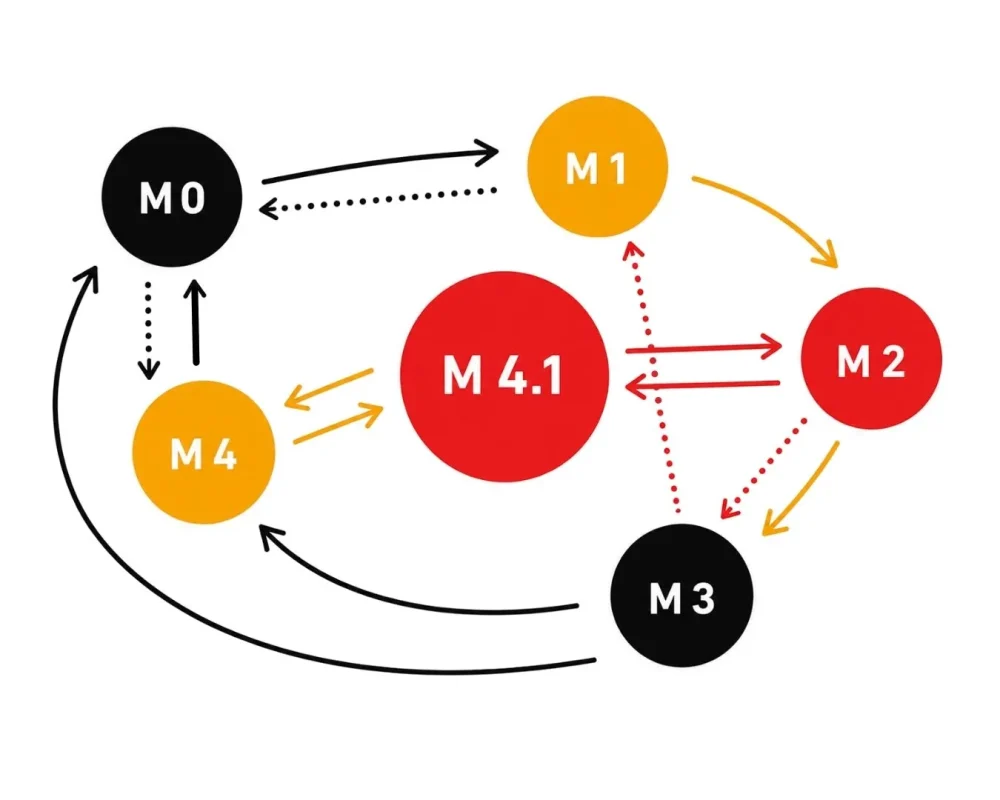
Digital Dermatitis follows a repeating infection cycle, moving through different lesion stages known as the “M-stages.” Understanding these stages is important because stopping the cycle early helps reduce new infections and lowers the chance of painful active lesions developing.2
M0: Healthy Skin
M0 represents normal, healthy skin with no visible signs of Digital Dermatitis.
This does not always mean the cow has never had DD before, some previously healed lesions may no longer be visible.
M1: Early Active Stage
M1 is the first active stage of infection.
These lesions are usually small, red-gray spots that begin forming in the skin around the heel or between the claws. At this point, lesions may either:
- progress into a painful M2 lesion,
- heal and return to M0,
- or move into a chronic stage later on.
M2: Acute Painful Lesion
M2 is the classic painful DD lesion.
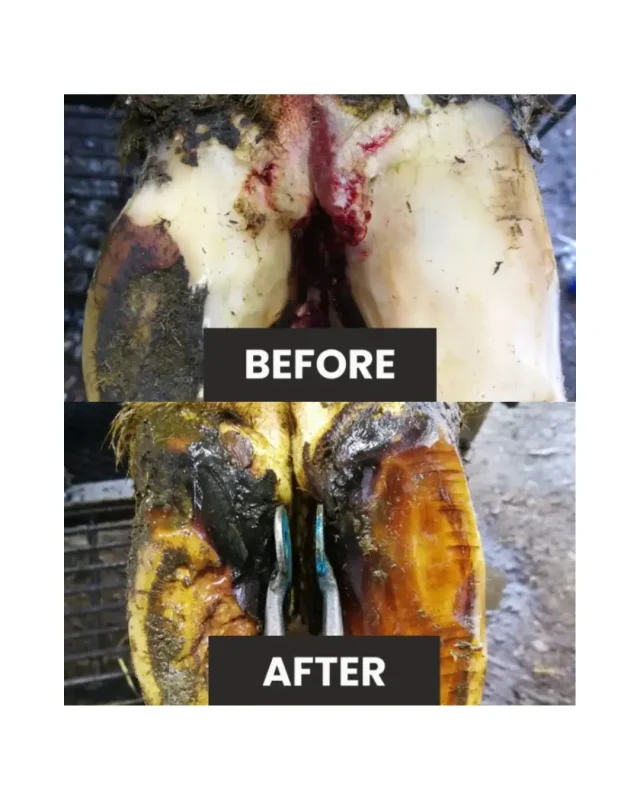
These ulcers are bright red, raw-looking, and highly sensitive to touch. This is the stage most associated with lameness and discomfort.
Large numbers of M2 lesions within a herd increase infection pressure and make outbreaks more likely. Early detection and treatment at this stage are critical before chronic tissue changes develop.
M3: Recovery Stage
Following continuous topical management, the lesion usually enters the M3 stage.
The area becomes covered by a dark scab or crust. These lesions are generally no longer painful.
However, this stage does not always mean the disease is fully eliminated, and lesions may later reactivate.
M4: Chronic Stage
M4 lesions are chronic DD lesions.
They often appear thickened, rough, wart-like, or overgrown. While they are usually less painful than M2 lesions, they act as a long-term reservoir for infection because DD-causing bacteria can remain deep in the skin.
M4.1: Reactivated Chronic Lesion
M4.1 occurs when a new active lesion develops inside or around an existing chronic M4 lesion.
This stage is important because it often reactivates the DD cycle and can quickly return to a painful M2 stage.
Why Early Detection Matters
The best opportunity to control DD is during the early active stages before lesions become chronic. Regular hoof checks, footbath routines, and identifying cows with M1, M4, or M4.1 lesions can help prevent new painful outbreaks from developing.3
Simplified DD Stage Flow
- M0 → Healthy skin
- M1 → Early active lesion
- M2 → Painful ulcerative lesion
- M3 → Recovery stage after topical applications
- M4 → Chronic wart-like lesion
- M4.1 → Reactivated chronic lesion with new active infection
The disease cycle can repeat continuously if chronic lesions remain unmanaged.
What a 2 month dairy farm observation revealed about DD-DELETE®:
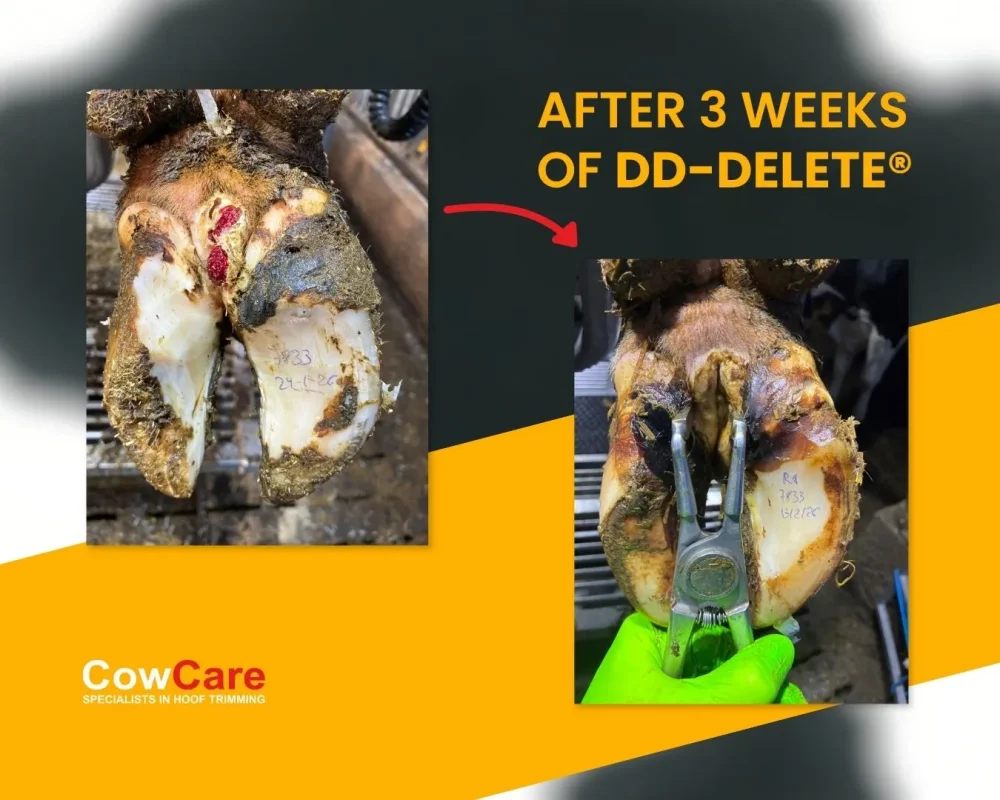
Researchers monitored lesion condition and lesion-stage progression at Day 7, Day 28, and Day 56 after application.
- Higher proportions of lesions progressing toward the M3 stage within the DD-DELETE® group during the observation period.
- A reduced need for repeated applications was identified compared to the reference group.
- Consistent long-term hoof condition support throughout the 2 month monitoring period was established.
By Day 28:
- 84.2% of monitored DD-DELETE® cases had progressed to the M3 stage
- Compared to 56.4% in the comparison group
By Day 56:
- 81.6% of monitored DD-DELETE® cases remained in the M3 stage
- Compared to 66.7% in the comparison group
The report also noted that fewer animals in the DD-DELETE® group required additional follow-up interventions during the study period.
Practical Advantages Highlighted in the Report
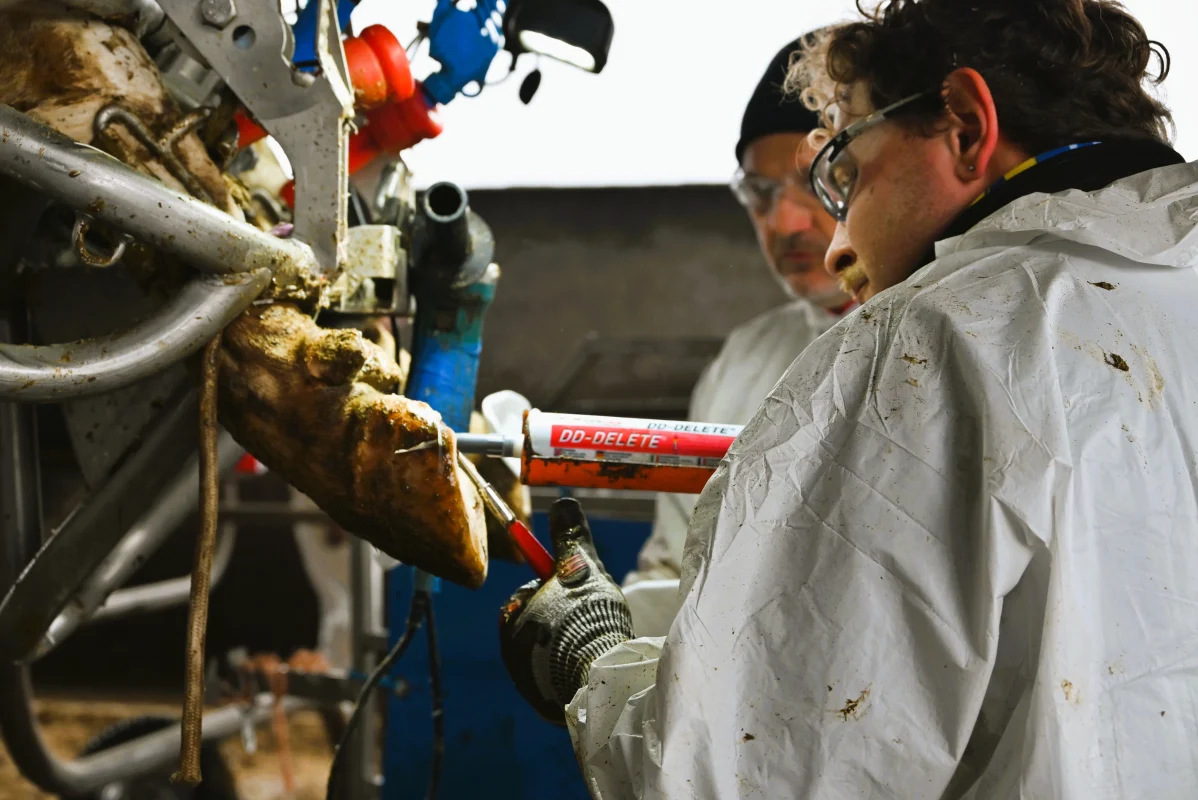
According to the report, several practical factors may contribute to the product’s usability and on-farm application benefits:
- Paste consistency allows longer contact time on the hoof
- Salicylic acid supports removal of damaged skin material
- Supports hoof hygiene and skin condition
- Antibiotic-free approach aligns with reduced antimicrobial use goals
- No airborne powder particles during application compared to some powdered alternatives
The report also observed fewer follow-up applications were needed in the DD-DELETE® group by Day 28, potentially reducing labour and repeated animal handling.
Supporting Hoof Wellness
Researchers emphasized that early detection, professional hoof trimming, hygiene practices, and consistent monitoring remain important components of maintaining hoof wellness in dairy herds. Preventive hygiene measures such as footbathing were also highlighted as part of long-term hoof care routines.
Important Notice!
Information above is based on observational study findings and is intended for informational purposes only. DD-DELETE® is designed to support hoof hygiene, hoof condition, and overall animal wellbeing.