A hoof block is a simple tool for cows that solves an important job: it helps shift weight away from an injured claw so the affected area has time to recover. But the block is only one part of a successful treatment. Correct trimming, a sound healthy claw for bonding, the right adhesive, and careful follow-up all matter.
This guide explains when hoof blocks are used on cows, the difference between wooden and rubber blocks, and how to choose the right glue and mixing equipment. It also introduces the new CowCare Block&Care Orange Rubber Hoof Block as a practical rubber alternative for modern hoof-care routines.
Important: A block supports a hoof-care plan; it does not replace proper diagnosis, lesion treatment, pain management, or follow-up. Work according to your farm’s veterinary and professional hoof-trimming protocol.
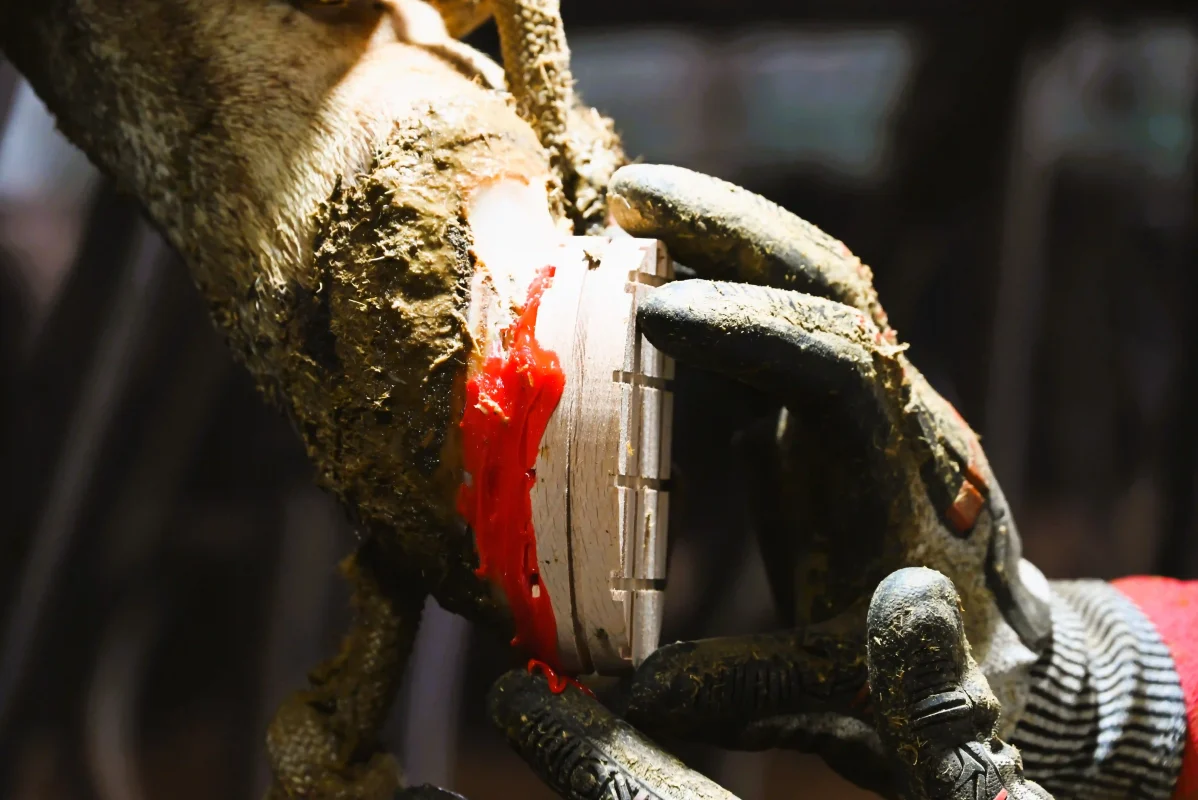
When should you use a hoof block?
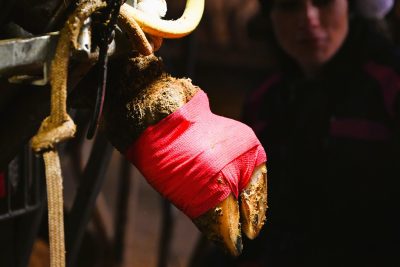
Hoof blocks are generally glued to the healthy claw next to an injured or painful claw. Raising the healthy claw transfers more of the cow’s weight away from the affected claw and can make walking more comfortable while the lesion heals.
A block may be considered after a professional examination and appropriate trimming when the goal is to unload the affected claw.
Common situations include:
- Sole ulcers and other pressure-related claw lesions
- White line lesions or infections where unloading is part of the treatment plan
- Localised claw pain where the opposite claw can safely carry more weight
- Cases where temporary mechanical support can help protect a treated area
The decision depends on the lesion, claw shape, available healthy horn, the cow’s mobility, and the expected work environment. A block should sit securely, allow a normal enough breakover for the individual claw, and not create a new pressure point.
For the full selection, browse CowCare’s hoof block range. CowCare also offers blocks and glues together so you can match the block material with the adhesive and application method.
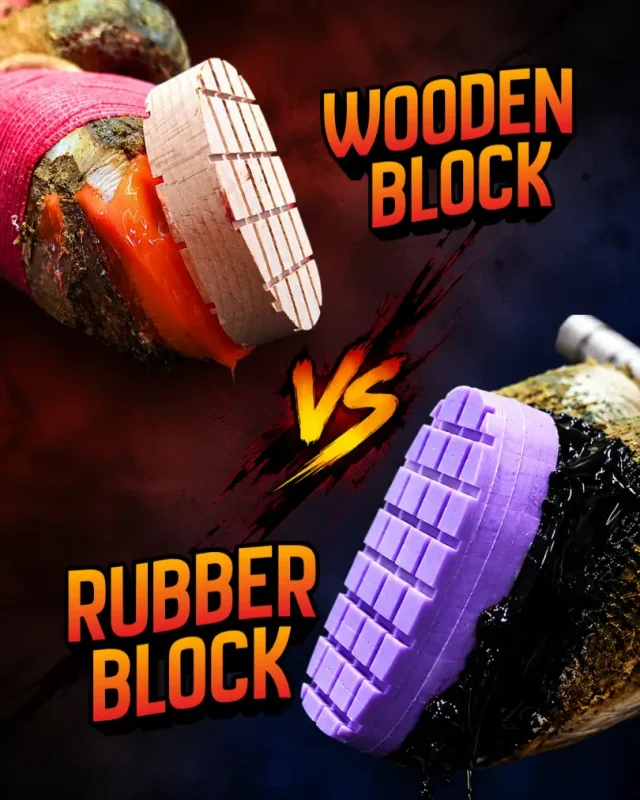
Wooden vs rubber hoof blocks: what is the difference?
Both wooden and rubber blocks can be glued to a healthy claw to unload the injured claw. The better choice is not simply a matter of material preference. Consider the claw, the lesion, the cow’s environment, and the time available for application.
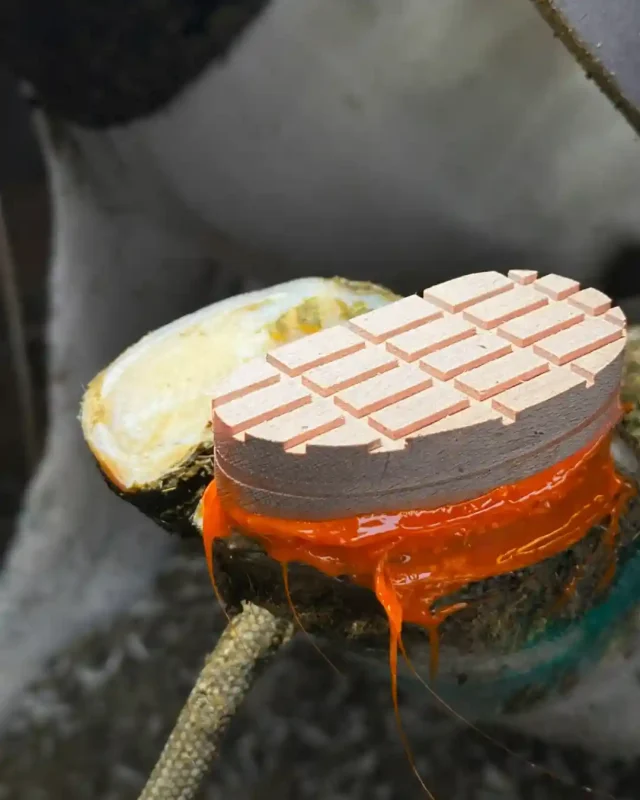
Wooden blocks: the industry standard
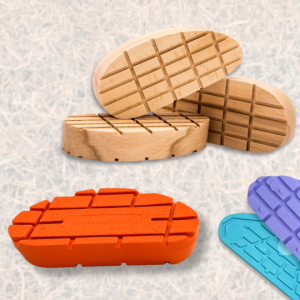
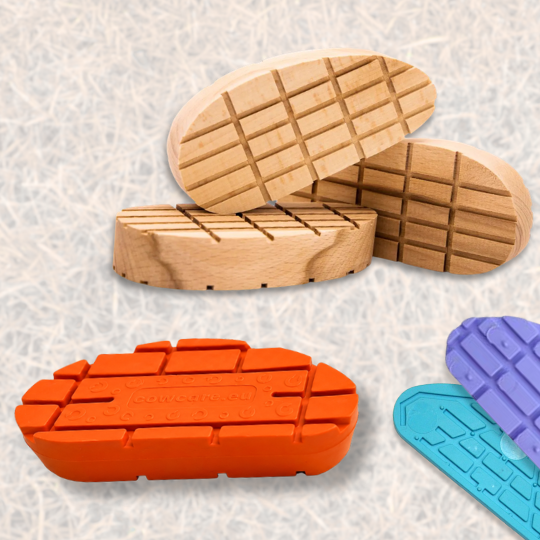
Wooden blocks remain popular because they are easy to handle, are cheaper, and are available in different lengths and profiles. A standard 11 cm wooden block is a practical choice for many routine applications; see the CowCare Standard Wooden Block, 11 cm.
Choose wood blocks when you want to:
- Keep a simple, familiar block in stock
- Use a cost-effective option for regular hoof-care work
CowCare also offers premium 11 cm wooden blocks, plus thin and wedged wooden options in the hoof blocks category. Always shape conservatively: the block should support unloading without introducing a sharp edge, rocking point, or excessive height.
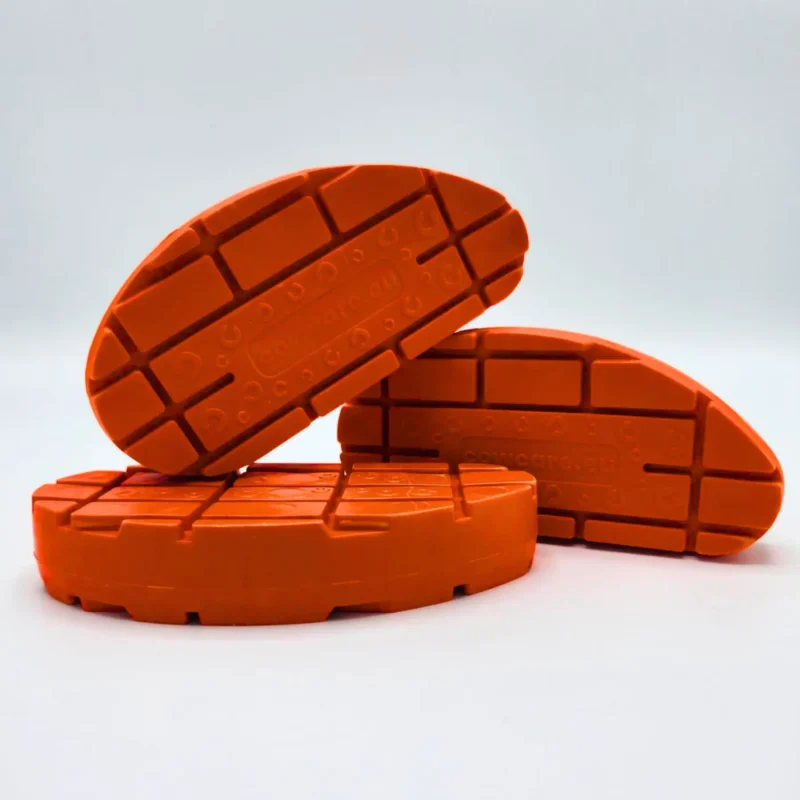
Rubber blocks: an alternative block for edge cases
Rubber blocks offer a different feel from wood. They trade a slightly higher unit price for durability, grip and cushioning. Their compliance can be useful when you want a less rigid interface between the claw and the walking surface, or when a rubber option better suits the cow, floor conditions, and treatment plan. They are not automatically the right answer for every lesion, but they give trimmers a different material choice.
CowCare’s new BlockCare Orange Rubber Hoof Block makes it easy to choose a dedicated rubber block instead of adapting a wooden one. It is a strong option to consider when your workflow calls for a rubber block and you want to pair it with a purpose-built hoof adhesive.
When using the rubber blocks, pay particular attention to:
- Selecting a size and shape that gives stable contact without overloading the healthy claw
- Preparing the claw and block so both bonding surfaces are clean and dry
- Using a glue that is specified for rubber blocks
- Allowing enough glue thickness for a stable bond
- Following the adhesive’s working time and loading instructions
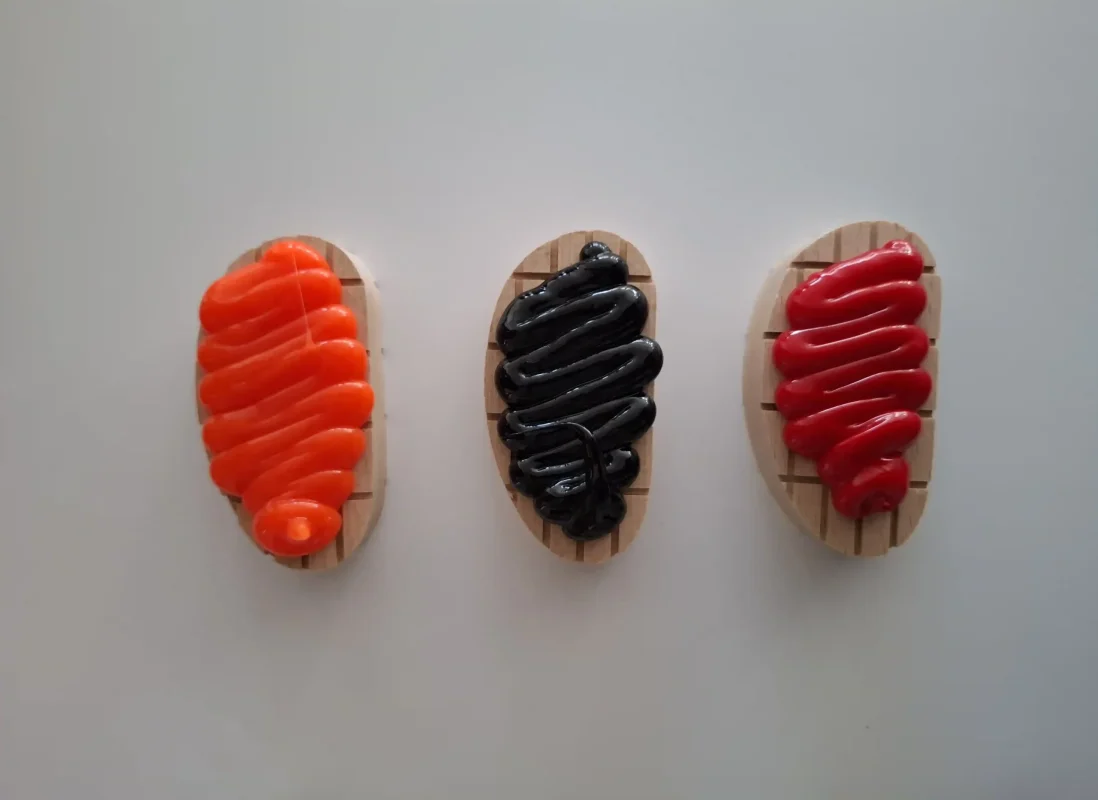
Choosing the right hoof glue
The block and the glue work as a system. CowCare’s Hoof Glues & Mixing Tips range includes fast-setting two-component adhesives and the mixing equipment needed to apply them consistently.
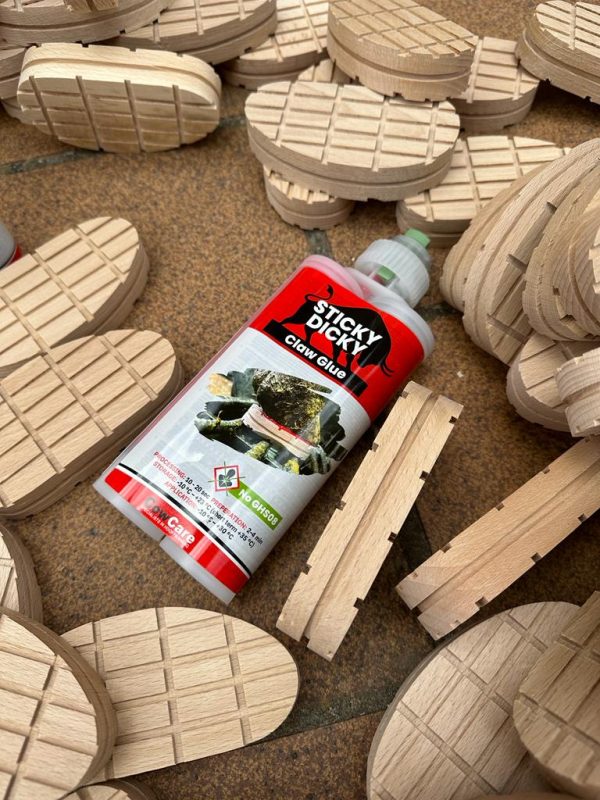
STICKY DICKY Hoof Glue: an everyday option for farmers, vets, and for general-purpose
STICKY DICKY Claw Glue is red a two-component polyurethane adhesive with a 10–20 second open time and a setting time of 2-4 minutes. This makes it a flexible choice for many day-to-day applications, provided the cartridge is stored and used within the stated temperature limits.
For smaller farms or occasional users, the STICKY DICKY farmer’s kit combines one glue cartridge, mixing tips, and wooden blocks. If you want to compare the system before ordering a larger quantity, the STICKY DICKY Try-Out Set includes three glues and 30 mixing tips.
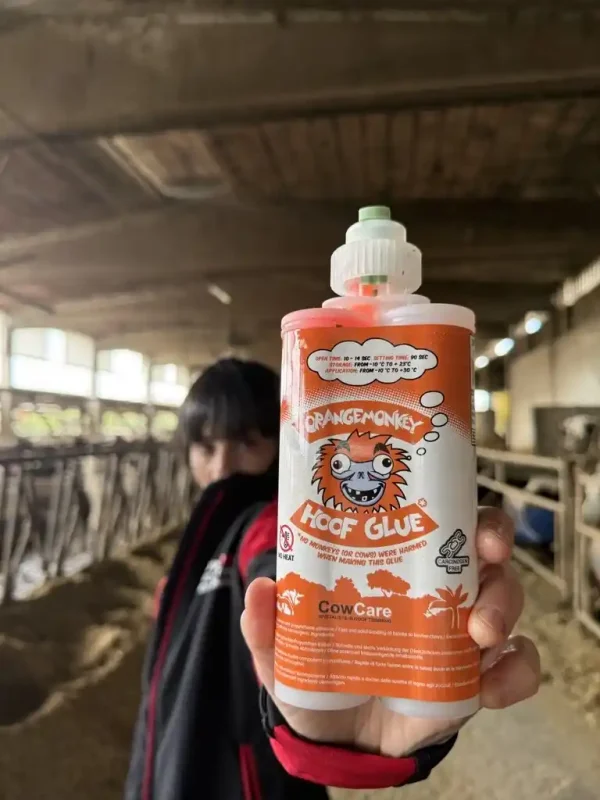
ORANGEMONKEY Hoof Glue: made for professional hoof trimmers
OrangeMonkey Hoof Glue, 200 ml is an orange fast-curing two-component polyurethane adhesive with controlled open time of 10–14 sec with setting time of 1–2 min, allowing accurate positioning before curing.
OrangeMonkey is a useful match for the new CowCare BlockCare Orange Rubber Hoof Block when you want a clearly visible glue line and a rubber-compatible adhesive. Always follow the current product instructions for glue temperature, storage, mixing, and loading.
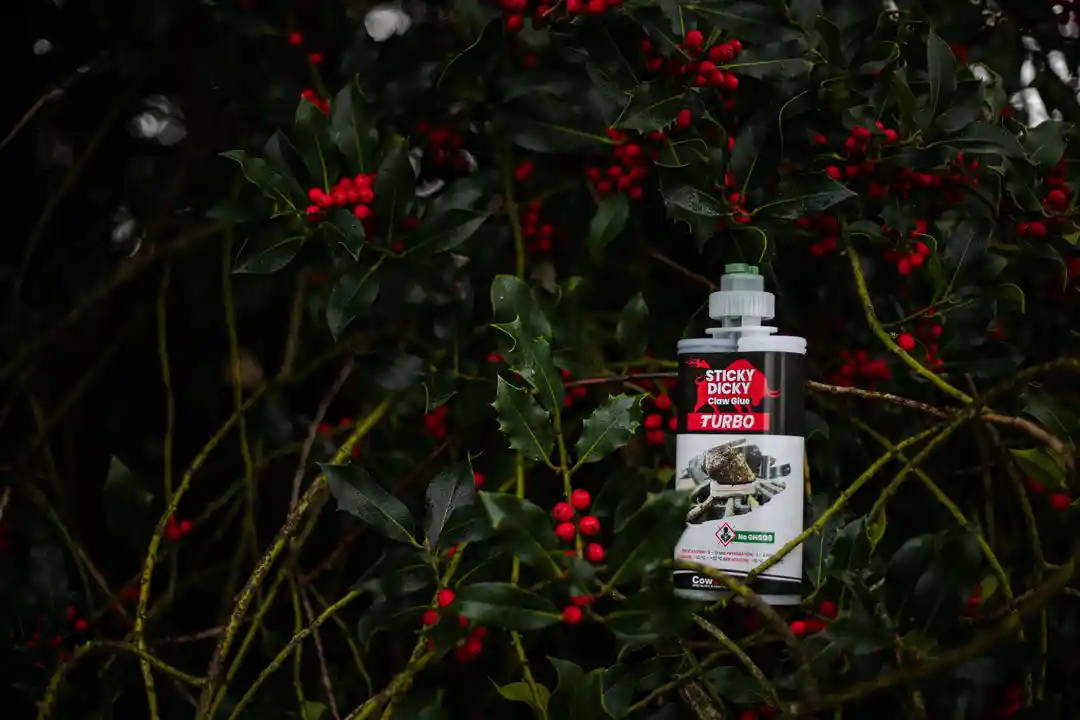
STICKY DICKY TURBO Hoof Glue: made for fast & experienced trimmers
STICKY DICKY TURBO Claw Glue is a black colored, ultra fast-curing two-component polyurethane adhesive for highly experienced hoof trimmers working at high speed. Open time 5–10 sec with a setting time of 1–2 min. Provides extremely rapid bonding, even at low temperatures.
Hoof-Tite HOT
Hoof-Tite HOT, 220 ml is designed for use when temperatures are around 18°C or higher and is suitable for both wooden and rubber blocks. Check the individual product instructions before use, especially for temperature, storage, and setting time.
Mixing tips are also part of the result
A two-component cartridge needs a suitable tip to mix the components in the correct proportion. CowCare’s straight 120 mm mixing tip for 200/220 ml cartridges is designed for compatible CowCare cartridges and similar systems.
There are also conical 120 mm mixing tips and a short conical 102 mm tip. The tip you use should match the cartridge and dispensing gun. CowCare notes that a new tip should be fitted before a new application because cured glue in the used tip seals the cartridge.
For regular work, pair the adhesive with a suitable Electric Dispensing Gun for consistent layers every time or any other compatible 200/220 ml applicator. Correct dispensing equipment helps maintain an even mix and glue layer.
Which hoof block should you choose?
Use a wooden block when you want a familiar, shapeable, economical all-rounder. Start with the CowCare Standard Wooden Block, 11 cm or explore premium, thin, and wedged wooden options.
Choose a rubber block when a more compliant material suits the claw, the cow, and the walking environment. The new CowCare BlockCare Orange Rubber Hoof Block gives you a dedicated rubber option to pair with compatible CowCare adhesives such as OrangeMonkey or STICKY DICKY.
If you are building a complete setup, start with the blocks and glues category, compare the hoof glue kits, and add the correct mixing tip and dispensing gun for your cartridge system.
Final takeaway
The right hoof block is the one that fits the treatment plan, supports the healthy claw, and stays securely bonded without creating new pressure. Wooden blocks remain a versatile standard; rubber blocks offer a good alternative. Whichever material you choose, success comes from the complete process: proper trimming, a clean and dry claw, compatible glue, correct application, an even adhesive layer, accurate placement, and follow-up.
Still not sure which block suits your setup? Get in touch with us: we’ll provide you A-Z recommendations for your exact case! Worldwide delivery, wherever your farm is.