
Blog / News
The hoof bandage is the part everyone underestimates
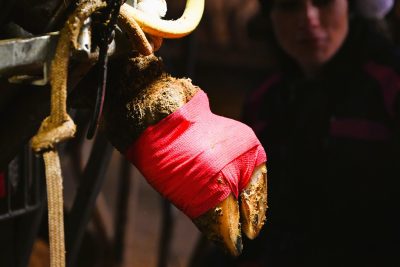
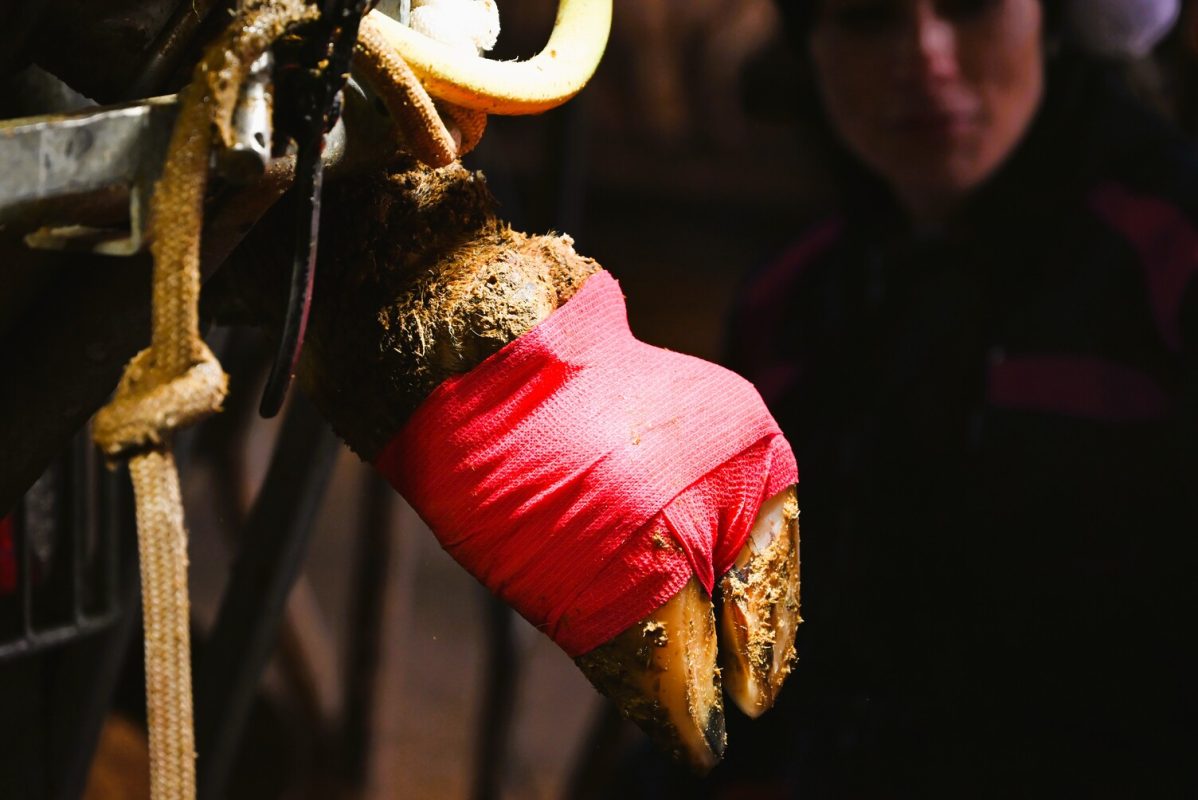
Most of the attention in hoof care goes to the trim itself, the knife, the disc, the chute. The bandage gets treated as an afterthought: grab whatever roll is in the box, wrap it, move on to the next cow. Then the cow walks straight into a slurry-covered alley.
That is the real test. Whatever you applied in the chute now has to survive standing in manure, being scraped against concrete and cubicle curbs, getting soaked, and carrying 650+ kg of animal on it for several days. If the wrap slips, unravels or wicks moisture inward, the work you did in the chute, and any care product you applied under it stops doing its job.
Choosing the right bandage is not about brand loyalty. It is about matching the material to the conditions in your barn.
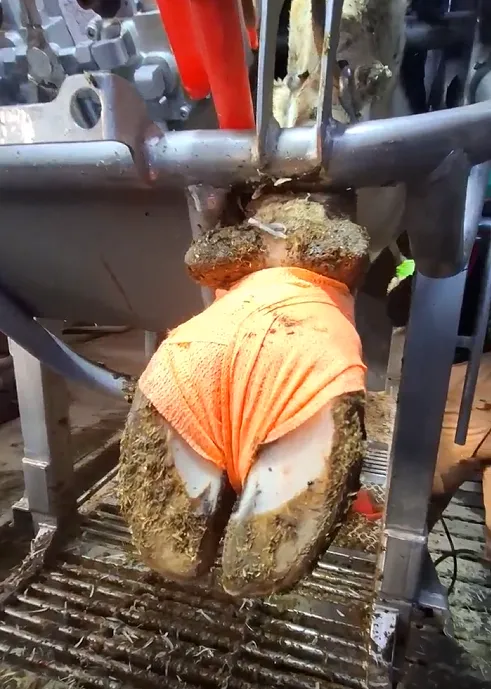
Self-adhesive (cohesive) bandages: why they became the standard
A cohesive bandage sticks to itself and nothing else. It does not adhere to skin, hair or the hoof wall. That single property is what makes it practical for cattle:
- No pins, clips, knots or extra tape. The last wrap locks the whole bandage.
- Nothing to pull out. No adhesive tearing hair off the pastern when it comes off.
- You tear it by hand. No scissors needed in the chute, which matters when you are working one-handed on a lifted leg.
- It stretches, then holds. Elastic recovery keeps constant, even pressure on a limb that is moving, flexing and being weighted.
CowCare’s TAPE&CARE range is built on this principle. Both versions are 10 cm wide with a 200/450 cm stretch effect, roughly 2 m unstretched, extending to 4.5 m as you apply it. That width is deliberate: 10 cm covers a claw and the interdigital space in fewer passes than a narrow tape, so you build a bandage in seconds rather than minutes.
The stretch ratio is the spec that matters
“200/450 cm” is not marketing filler. It tells you how much material you actually get per roll and how much tension is available. A bandage applied at full stretch on every pass is a bandage applied too tightly. Applied at roughly half stretch, with the last one or two turns laid on with almost no tension, you get a wrap that grips itself, holds shape, and still allows normal circulation and movement.
Practical rule: stretch it to route it, relax it to finish it.
Classic or bio? Choosing between the TAPE&CARE versions
Both do the same job. The difference is material and how visible you want the wrap to be.
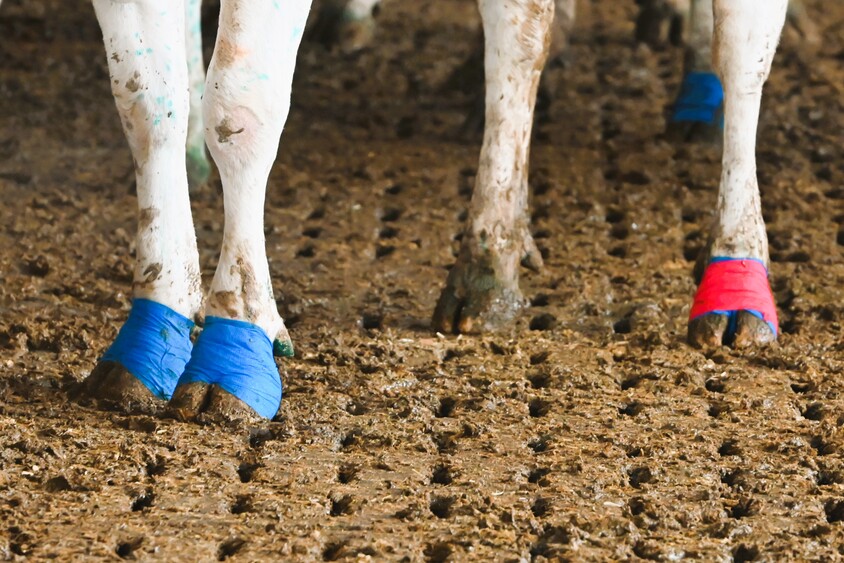
TAPE&CARE CLASSIC: red and blue
- 10 cm × 450 cm stretched, 12 rolls per box
- Strong, lightweight, porous material, sweat and water resistant, absorbs no moisture
- Keeps its handling properties in cold weather, which is the point at which cheap cohesive bandages get stiff and stop bonding to themselves
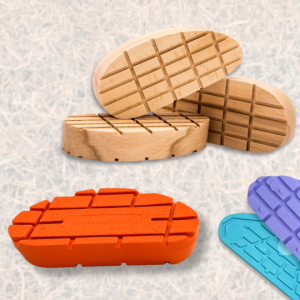
Two colours is not a cosmetic choice, it is a free record-keeping system. Red for one claw or one type of intervention, blue for another. Or red for “check tomorrow”, blue for “remove day five”. At the next milking, anyone in the parlour can read the herd at a glance without opening a spreadsheet. If you already colour-code with hoof blocks, run the same logic on the wrap.
TAPE&CARE BIO: orange
- Same 10 cm × 200/450 cm format, 12 pieces per package
- Biodegradable material, the answer to the one genuinely awkward thing about cohesive bandages: they come off in the barn, in the alley, in the slurry, and in the field afterwards
- High-visibility orange, so a wrap that has come loose is easy to spot on a slatted floor before it ends up in the scraper or the manure store
If your farm is working toward a sustainability standard, or your milk buyer asks questions about plastic use on farm, the bio version is the easy switch. Nothing about your routine changes, same width, same stretch, same handling.

The care layer under the bandage does most of the work
A bandage on its own is a mechanical cover. What decides whether it is worth applying is usually what sits underneath it.
When a care product such as DD-DELETE® Care Gel is applied during routine skin care, the practical problem is immediate: the animal steps down into a wet, dirty alley and the product is exposed to moisture and manure straight away. A bandage helps keep it in place. A dry pad plus a bandage does it considerably better.
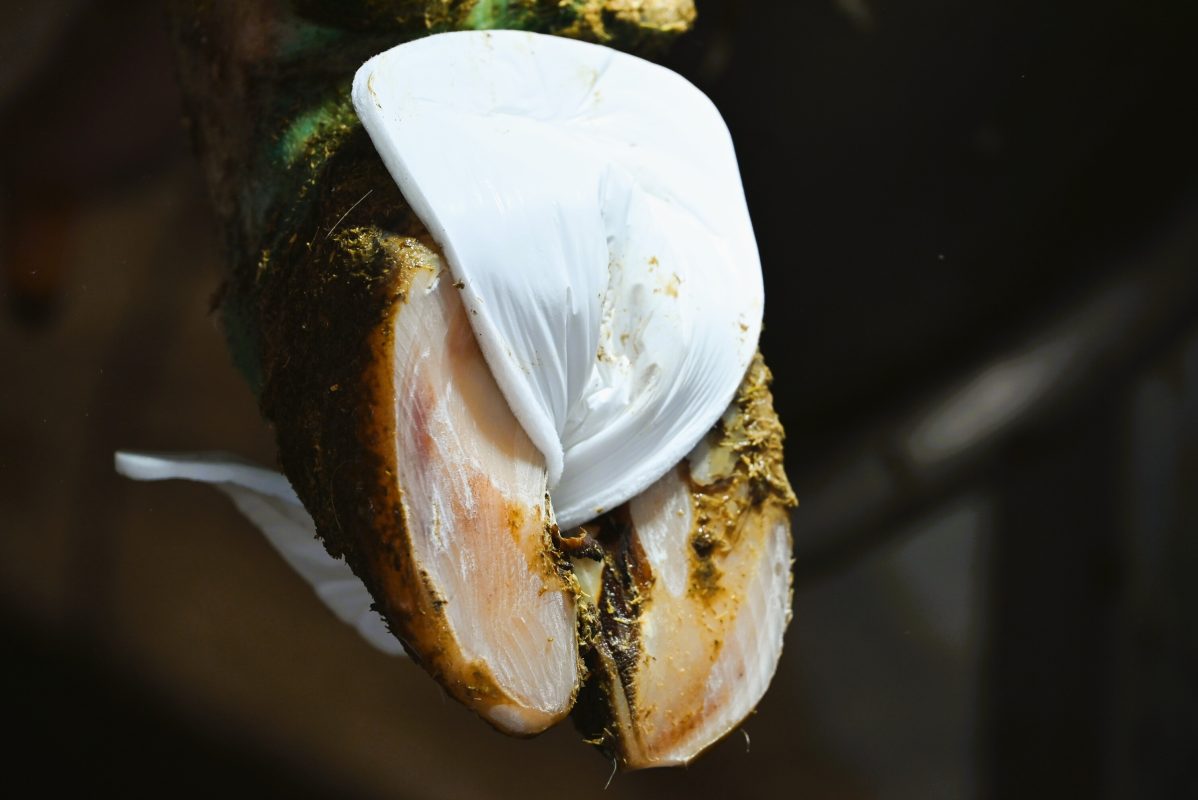
CowCare DD-Delete® Dry Pads (12 pcs)
- 115 × 247 mm, cellulose and bi-component PE/PP fibres with a PE foil backing
- Sized to fit between the claws and fold over the front and back of the interdigital space
- The foil side is the working part: it is a physical barrier against slurry and moisture pushing in from the outside, while the absorbent side sits against the skin
The pad also makes application easier. Because it distributes pressure across the area rather than concentrating it under a few turns of bandage, you can wrap with less tension and still get a stable dressing.
The three-layer routine that works:
- Clean and dry the area properly. Nothing sticks to, or stays on, a wet, dirty claw.
- Apply the care product, DD-DELETE® Care Gel for general skin care, or DD-DELETE WHITE LINE® Care Gel where the white line area is the focus. A dispensing gun gives you controlled placement instead of a smeared handful.
- Position the dry pad, then wrap with TAPE&CARE, moderate stretch through the middle, final turns relaxed.
Then write the cow number down. A bandage nobody remembers is the single most common failure in this whole process.
Application mistakes that cost you the cow’s comfort
Wrapping too tight. The most common and the most damaging. A cohesive bandage feels secure at full stretch, which is precisely why people over-apply it. Use partial stretch and let the material do the gripping.
Starting and finishing in the wrong place. Start on a stable, flat surface and finish there too. A final turn that ends on a sharp edge or high-wear point is a bandage that starts peeling on the first pass through the alley.
Building too much bulk. More layers is not more protection, it is more surface for manure to load onto and more weight to drag the wrap down. Two to three overlapping passes over a correctly placed pad is usually plenty.
Leaving it on too long. Manufacturer guidance for TAPE&CARE is to check daily and remove after 3 to 5 days. DD-DELETE® guidance is to remove the bandage after four to five days. Set the calendar reminder before the cow leaves the chute.
No plan for removal. Which brings us to the tool most farms are missing.
Removal: the step that gets people kicked
Cutting a bandage off a standing cow’s leg, in a headlock or a cubicle, with a hoof knife, is how hands get hurt. You are close to a hind leg, bent over, holding a sharp blade against a limb that can move faster than you can.
The CowCare Bandage Remover Knife WrapCutter exists specifically to remove that risk:
- 60 cm version: 420-grade, 2.5 mm stainless blade, 50-56 HRC, white birch handle. Enough reach to work from outside kicking range in a headlock or feed fence.
- 120 cm version: Same blade, double the working distance, and it splits into two screwed sections so it fits in a vehicle or tool case.
The detail that matters on both: the rounded tip. It slides under a wrap without a point to catch skin. You hook the bandage, draw the blade through it from whatever angle you can reach, and the wrap falls away: no wrestling, no kneeling, no second person holding the leg.
For a trimmer removing wraps on twenty cows, this is a few minutes of work. It pays for itself the first time it stops one kick.
Where the other tapes fit
Cohesive bandages are not the only option, and our tapes and bandages category carries the alternatives for specific jobs:
- Silvertape (5 cm × 50 m): narrow, for tight, targeted wraps
- Certoplast/Vorwerk with tar (45 mm × 25 m): an adhesive tar tape, a very different tool from a cohesive wrap
- VetTape and Claw Bandage Tape Tesa: long-roll cotton tapes for trimmers who prefer a firmer, more traditional wrap
- Padding Absorba and sanitary cotton: bulk padding where a dry pad is not the right shape
If you are not sure which suits your routine, get in touch & tell us your barn conditions and herd size and we will tell you what most farms in your situation end up using.
Quick comparison
| TAPE&CARE CLASSIC | TAPE&CARE BIO | DD-Delete® Dry Pads | |
|---|---|---|---|
| Format | 10 cm × 200/450 cm | 10 cm × 200/450 cm | 115 × 247 mm |
| Colours | Red, blue | Orange | White |
| Material | Strong porous, non-absorbent | Biodegradable | Cellulose + PE/PP |
| Pack | 12 per box | 12 per box | 12 per package |
| Best for | Everyday volume use, colour coding | Farms concious of cutting plastic on farm | Holding care DD-DELETE gel in place under a wrap |
FAQ
How long can a hoof bandage stay on a cow? CowCare TAPE&CARE guidance is to check the bandage daily and remove it after 3–5 days. When used with DD-DELETE® Care Gel, the guidance is to remove after four to five days. Leaving a wrap on indefinitely is not the goal: the bandage is there to hold something in place for a defined period, then come off.
Do self-adhesive bandages stick to the cow’s hair? No. Cohesive bandages bond only to themselves. That is what makes removal quick and what stops hair being pulled off the pastern.
How tight should a claw bandage be? Tight enough not to slip, loose enough not to restrict circulation. Apply the middle turns at partial stretch and lay the final turns on with almost no tension. If you have to pull hard to make it stay, something else is wrong, usually the surface was not clean and dry.
What is the difference between a biodegradable and a regular bandage? The material. The bio version is biodegradable and high-visibility orange; the classic is the standard non-absorbent porous material in red or blue. Width, length, stretch and handling are the same.
Do I need a dry pad as well as a bandage? Not always, but if you have applied a care gel and the cow is going back onto a wet, dirty floor, the foil-backed pad is what keeps slurry and moisture off it. It also lets you wrap with less pressure.
Can I use scissors or a hoof knife to remove bandages? You can, but you will be working close to the leg with a sharp blade. A 60 cm or 120 cm WrapCutter lets you cut from outside kicking distance with a rounded tip that will not catch the skin.

Get the routine set up properly
At CowCare, we believe professional hoof trimming starts with the right tools. That’s why our product range is built to support farmers, hoof trimmers, and veterinarians with reliable, modern solutions for everyday hoof care. Choosing quality equipment is about setting the standard for healthy hooves and sustainable cattle management.
Shop now!